Choosing Packaging for Air-Sensitive Cosmetic Actives
A formulation-first guide to evaluating airless pumps, droppers, opaque packs, and compatibility testing for oxidation-sensitive products.
A formulation-first guide to evaluating airless pumps, droppers, opaque packs, and compatibility testing for oxidation-sensitive products.
Packaging is part of the formulation system
A stable bulk formula can still fail in market if the pack introduces too much air, light, contamination risk, evaporation, or material interaction. Package selection should begin while the formula is being developed, not after the final sample is approved.
Match the dispensing system to the risk
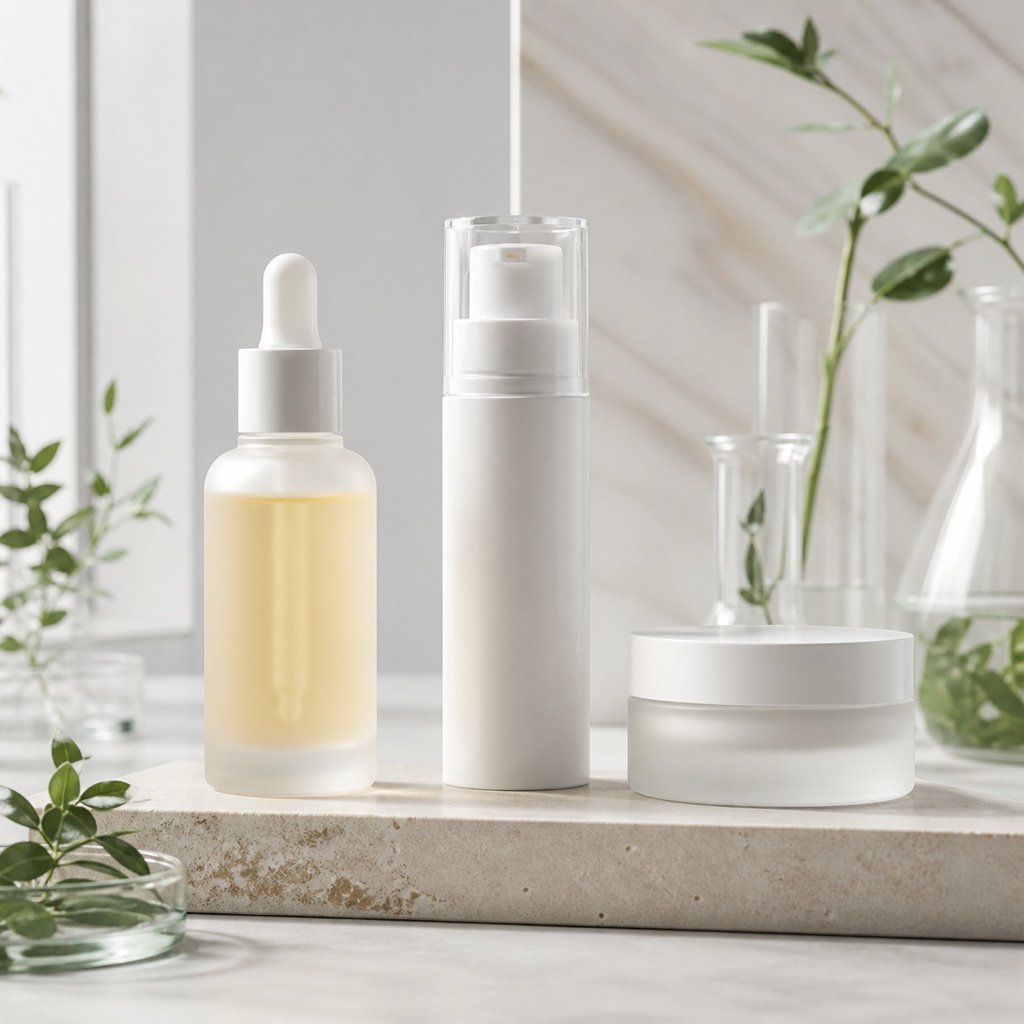
Airless pumps can reduce repeated air exchange and direct finger contact. Opaque or UV-limiting packs may help when light exposure is a known risk. Droppers provide a familiar premium experience but expose the headspace whenever the pack is opened and require careful compatibility review.
- Oxygen and light sensitivity of the formula
- Viscosity and dose accuracy
- Consumer handling and contamination exposure
- Component material, seals, springs, and decoration
- Target fill volume, shipping conditions, and e-commerce leakage risk
Run compatibility checks with the production-intent pack
Compatibility work should use the intended component set and filled product. Observe dispensing, leakage, paneling, staining, odour change, corrosion, label adhesion, and visible formula change under the agreed storage conditions. A visually similar sample pack is not proof that the final sourced component will behave the same way.